
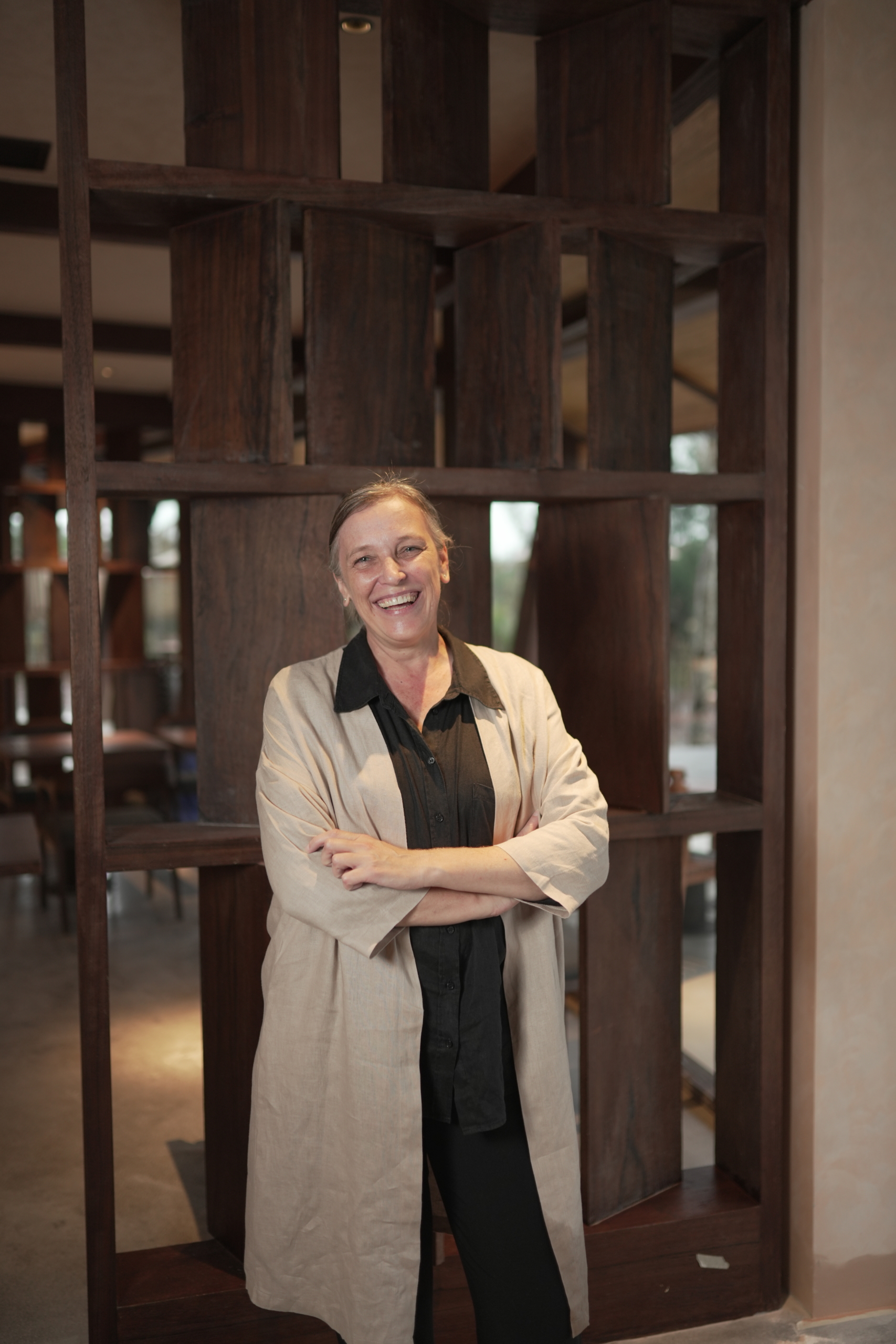
How a South African wellness pioneer turned two decades of living in Hoi An into Vietnam’s most talked-about new resort.
Michelle Ford grew up in a small town in South Africa with no hotels and no spas. By fifteen, she knew she wanted to work in hospitality. That instinct carried her across the world – through hotel operations, regional spa management at Minor International, and eventually to Asia, drawn by the boutique luxury and sustainability focus of brands like Six Senses and Aman. Somewhere along the way, she also became a systemic constellations practitioner – a discipline focused on the hidden dynamics within systems, restoring balance and harmony. It is an unusual credential for a hotel GM, but at Namia River Retreat, it makes perfect sense.
She has lived in Hoi An for roughly twenty years. Ask what keeps her, and the answer is simple: home. The openness and kindness of Vietnamese people. A constantly nourishing creative environment where bronze, copper, wood, weaving, and pottery artisans can turn any design vision into reality. Hoi An gave her all of that, and Namia, she says, is her thank-you letter to the town for welcoming her.
From Burnout to Building
The path to Namia was not a straight line. Ford experienced burnout that fundamentally changed the way she works, pushing her deeper into wellness. At the same time, she watched the region around her grow with large concrete hotels and felt increasingly disconnected from an industry she had devoted her career to. She considered walking away entirely.
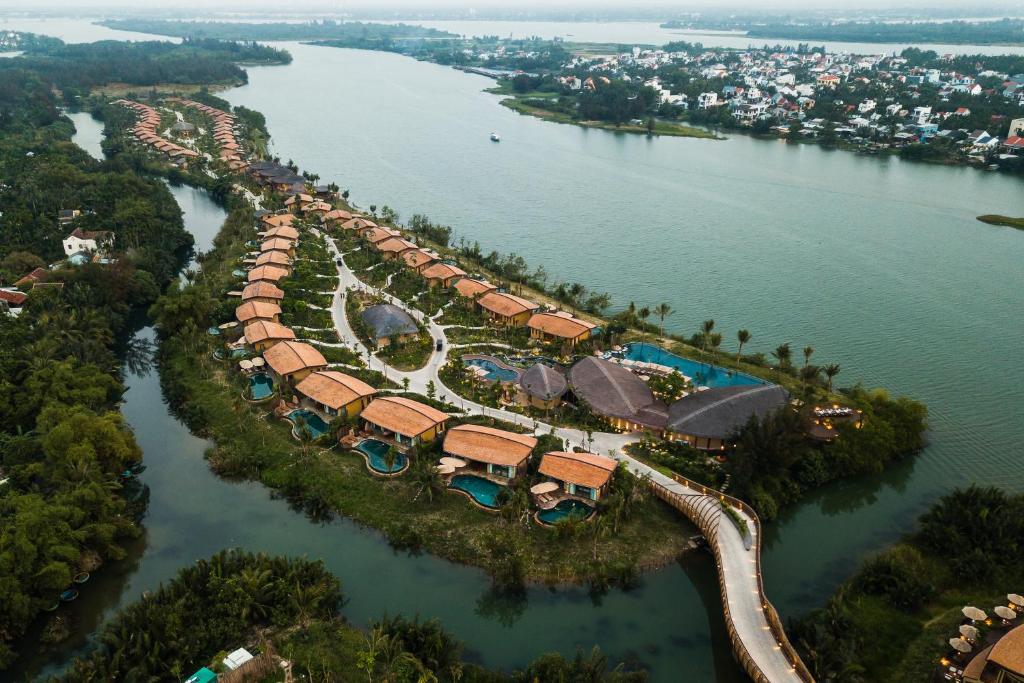
Then came a meeting with Mr. Tran Thanh Nam, Chairman of HG Holdings and owner of Bhaya Cruises. They walked the land together – a barren islet at the time, accessible only by boat. He shared his vision for authentic Vietnamese hospitality, something that honoured his memories of growing up in a village while reflecting the modern, dynamic Vietnam his sons would inherit. They discussed regenerating the land with indigenous plants, sourcing local materials and craftsmen, and building in harmony with nature rather than over it.
“We knew at once we were aligned,” Ford says, “and this was a worthy project to dive into.”
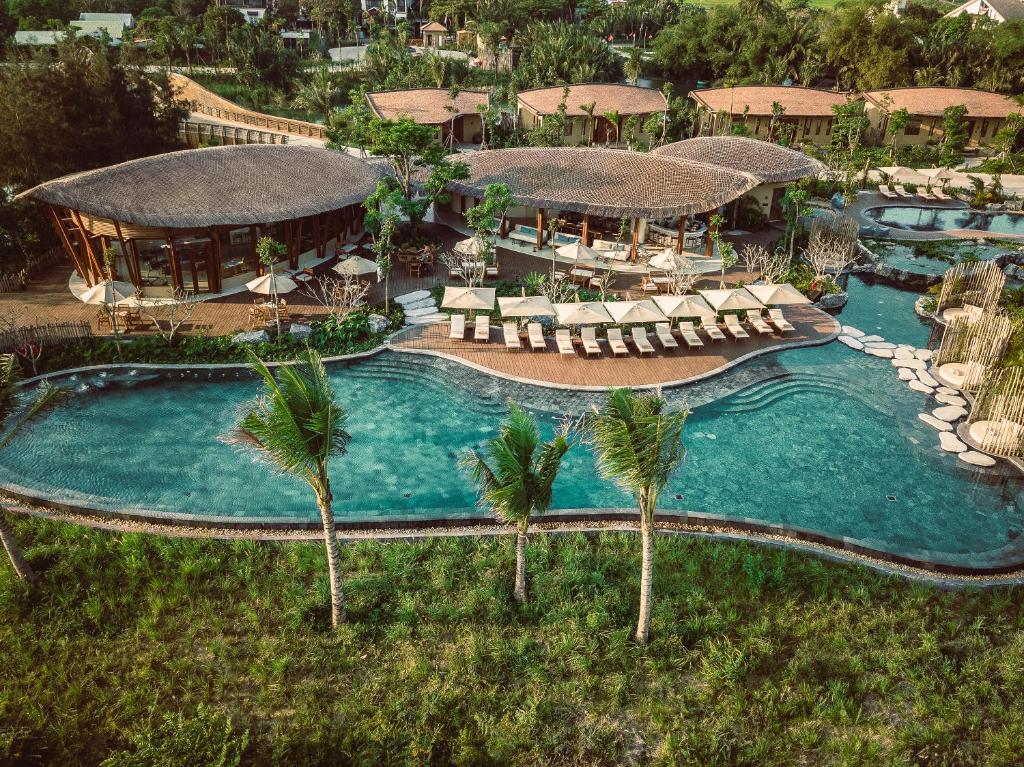
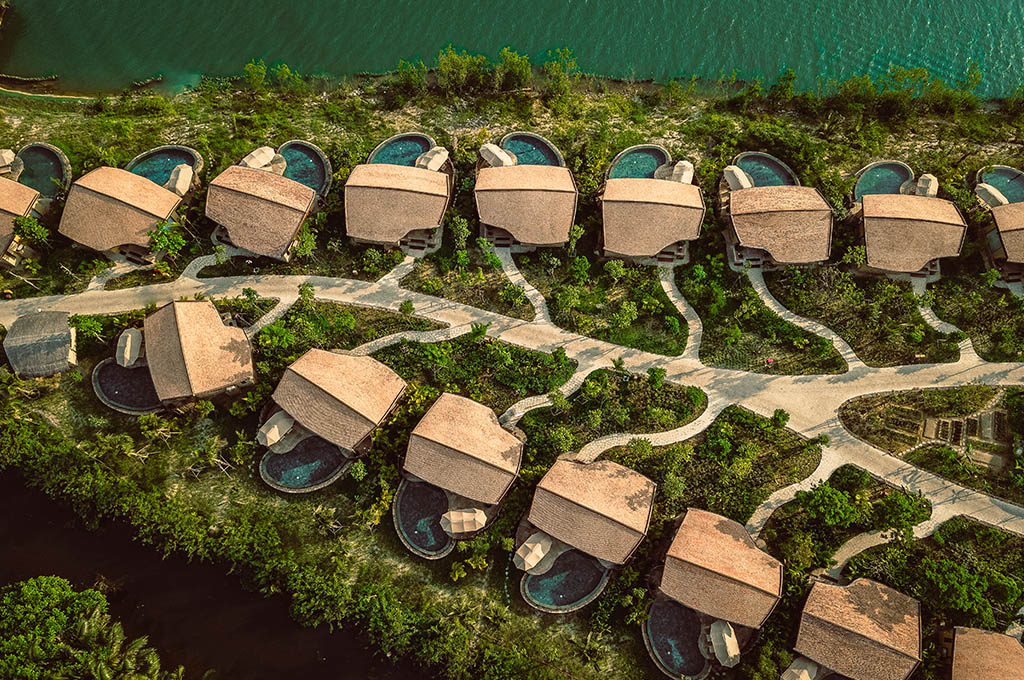
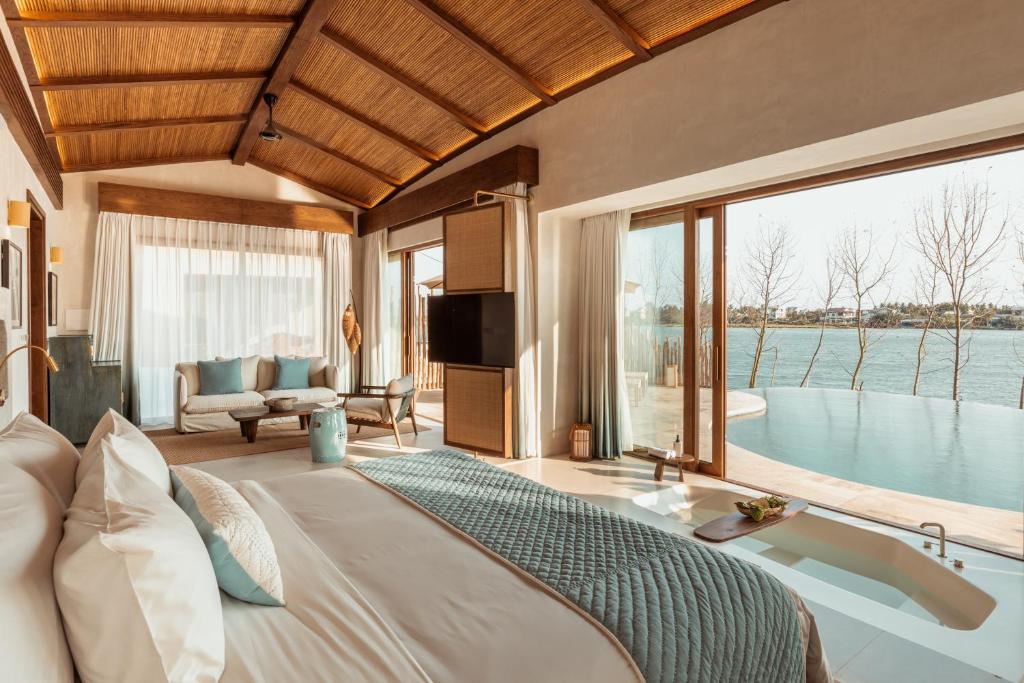
The result is Namia River Retreat – Hoi An’s first and only five-star all-villa resort, set on a five-hectare private islet along the Thu Bon River. The name itself tells the story: “Namia” is derived from Nam and Mia, two brothers – the craftsman and the fisherman – who meet to create a village. The islet where the resort sits is called Con Ba Xa, which translates to “Three-Village Islet.” Three pillar stories run through everything at the property: Crafted with Nature, Life by the River, and Ritual of Light. They show up in the interior design, the material choices, and every operational experience. Guests feel them without necessarily naming them.
Vietnamese Healing, Not Borrowed Traditions
What sets Namia apart from most luxury wellness resorts in Southeast Asia is what it chose not to do. There are no Thai massage menus, no Balinese rituals, no Ayurvedic programmes. The entire wellness offering is built on Thuoc Nam – Vietnamese southern herbology, the traditional folk remedies practised by Vietnamese people in daily life.
Ford is candid about the challenges. Because these practices are woven into everyday Vietnamese life, their uniqueness is sometimes invisible to those closest to them. They have never been presented in luxury hospitality settings before, so bridging the gap between a traditional village therapy and a five-star spa experience takes deliberate work. And there are language barriers in capturing and translating the wisdom, essence, and therapeutic benefits for an international audience.
That is where Lumina Wellbeing & Spa – the wellness management company Ford founded and still leads alongside her GM role – comes in. The team works directly with indigenous healers, traditional doctors, and local duong sinh practitioners to preserve knowledge and bring it to a younger generation before it is lost.
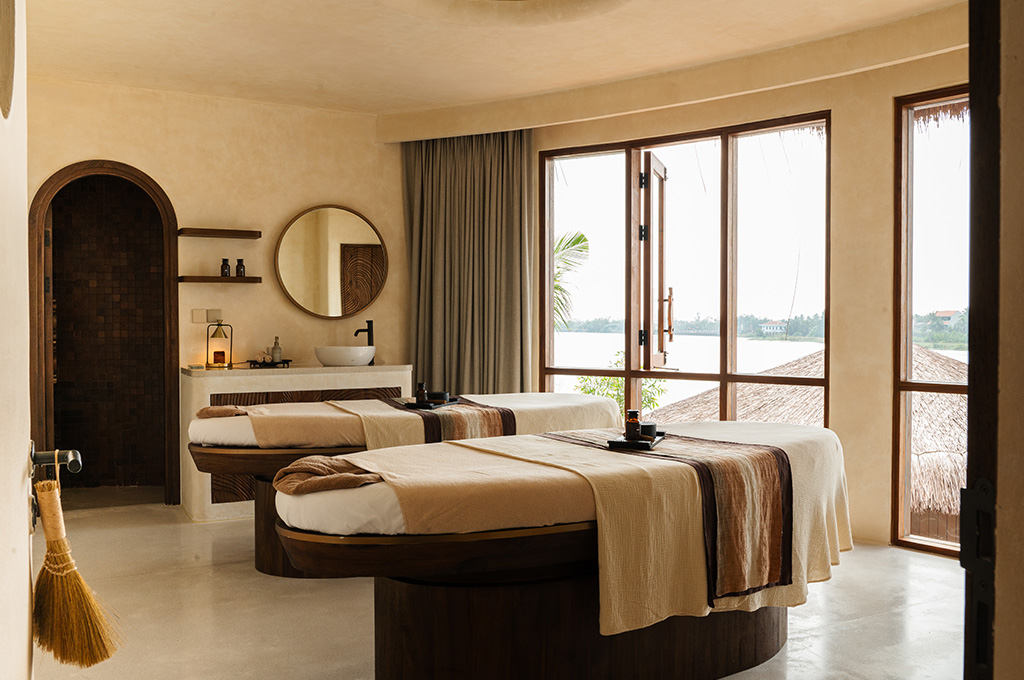
The commercial model is bold. Every guest receives a 90-minute daily wellness journey included in their stay – 30 minutes of hydrotherapy followed by a 60-minute traditional therapy. The facility was purpose-built for this from the start, and the wellness staff are trained in house, in collaboration with local traditional medicine doctors. The results speak for themselves: 95 percent of guests take up the daily treatments, compared to an industry standard of roughly 10 to 15 percent paying for spa services at conventional resorts. And after three consecutive days, Ford says, the cumulative effect is visible – deeper relaxation, stronger presence, a noticeable shift.
“Just as hotels offer breakfast included, we believe wellness and time to rest and restore is equally important – if not more so,” she says.
A Different Way to See Hoi An
Ford is clear-eyed about the challenges Hoi An faces. Mass tourism has transformed parts of the old town. But having lived here for two decades, she sees possibilities that most visitors – and many operators – miss entirely.
“If we shift the way we experience Hoi An – away from just the bustling streets at night – a completely different destination reveals itself,” she says. “An early morning cycle into the old town before the crowds. A sunset cruise watching the city lights and lanterns come on from the river. These give you a completely new perspective.”
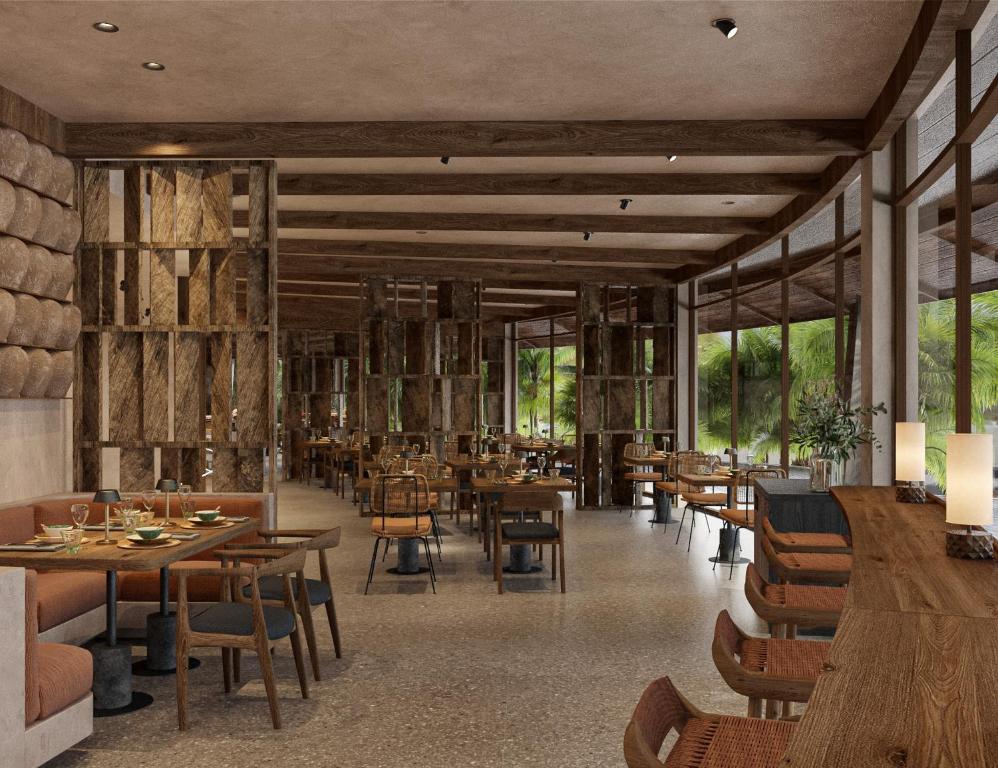
Sustainability at Namia goes beyond marketing. The resort was built using local materials, with furniture crafted at a factory in Danang. Lighting was designed to protect the dark sky. Indigenous landscaping was reintroduced to regenerate what was once barren land. At breakfast, the team tells guests where the produce comes from – working with small, sustainable suppliers rather than large-scale operations. Local granola vendors, bakers, and sausage makers create artisanal items sold through the resort, distributing income directly into the community.
The Ideal Day for a Golfer
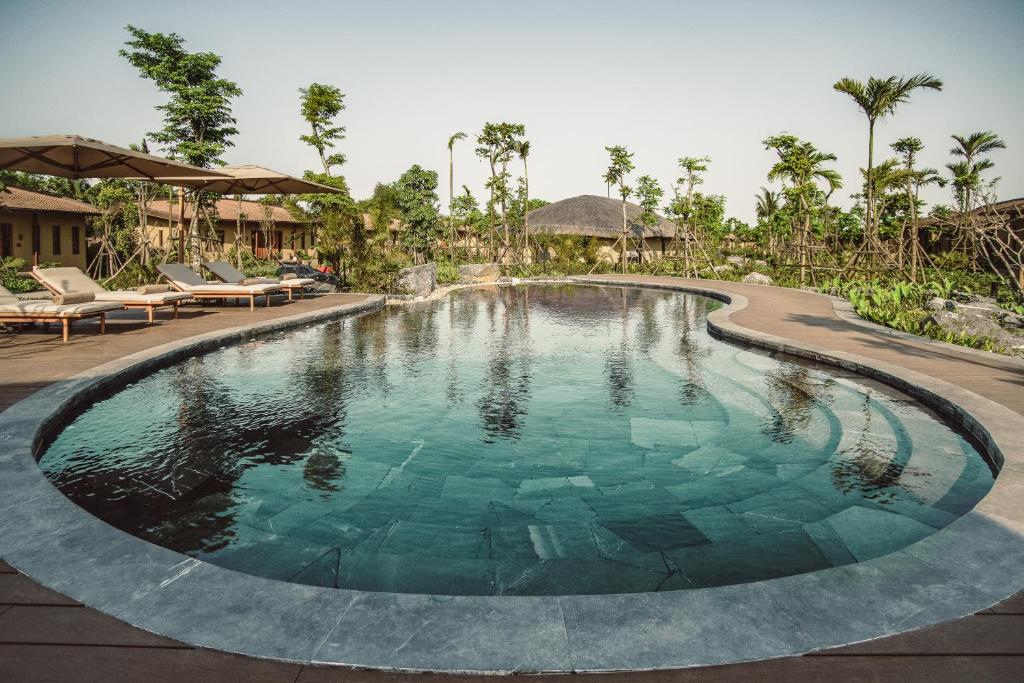
For visiting golfers, Ford describes the perfect Namia day without hesitation: early coffee and breakfast, then out to one of the nearby courses. Return for a swim in your private pool and a poolside lunch. Treat your body to a traditional deep-tissue massage at Lumina Wellbeing & Spa. Enjoy a sundowner cocktail on the resort’s cruise, followed by dinner with Vietnamese-crafted gins and an array of fresh local food – from traditional noodles to the signature roasted rice-paddy duck.
With seven or eight championship courses within comfortable driving distance of Hoi An, the golf infrastructure is already in place. What Namia adds is the part of the day that makes the golf trip memorable.
What’s Coming Next
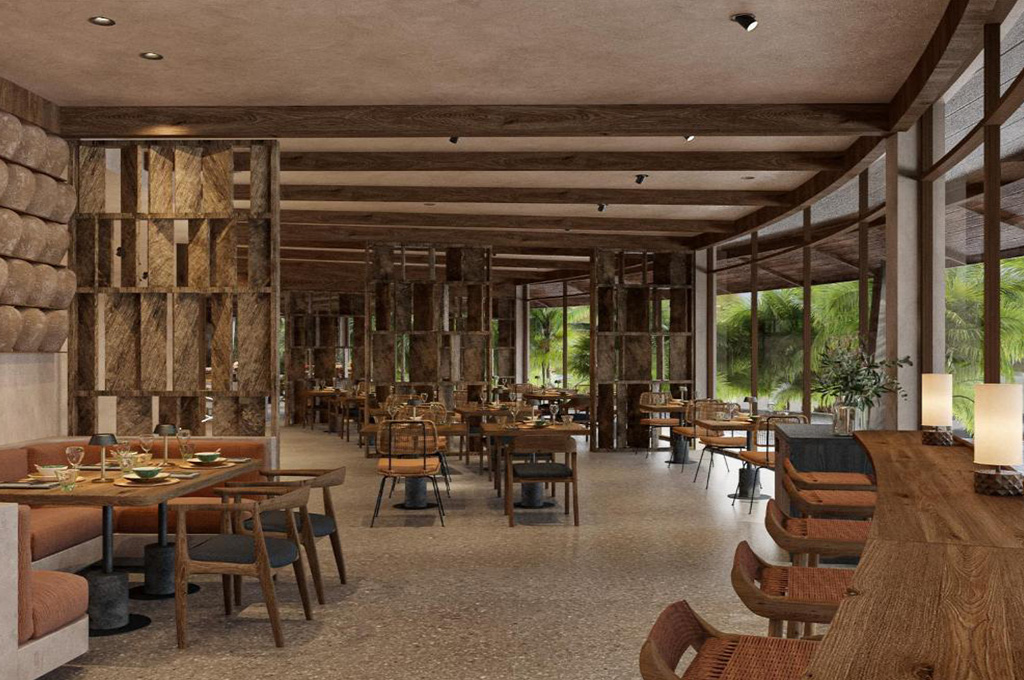
The next twelve months bring several new additions. The Merchant River Cruise – a custom-designed luxury dinner cruise on the Thu Bon River featuring sunset cocktails, a Vietnamese harvest buffet and seasonal coastal barbecue, and curated cultural stories as you pass riverside villages and quiet islets along ancient trading routes, returning by glowing lanterns to disembark at the resort. A Dinner Duet series at The Merchant Restaurant, launching with Chef Olivier Corti of the renowned Michelin-Selected restaurant, Le Comptoir. And a Slow Living Market – a full-day experience of local artisanal creations, from herbs and handcrafted delicacies to woodwork, for guests who want to take a piece of Hoi An’s artisan spirit home.
Still Just the Beginning
After more than twenty years building wellness programmes and opening properties across Asia, Ford says what excites her has not changed.
“We’ve come a long way, but we still have a long way to go,” she says. “We have only just begun to share what is possible in Vietnamese hospitality. It’s exciting to see the impact of inclusive wellness and the connection to Vietnamese southern herbology. Vietnam changes fast, and we get to explore and evolve together.”
And if you ask her for the one place in Hoi An that most visitors never find? She pauses, then smiles. “I’d probably have to share my secret local coffee shop – Slow Coffee in Tra Que. A little bakery, delicious pastries, strong Vietnamese-brewed coffee, overlooking the farm village. Twenty years, and it still feels like a discovery.”
Namia River Retreat is one of the most exciting new properties on Golfasian’s central Vietnam golf itineraries, ideally positioned for the Danang-Hoi An course corridor with seven championship layouts within easy reach. Whether you’re planning a dedicated Hoi An golf week, combining it with Hanoi or Ha Long Bay, or looking for a trip that keeps a non-golfing partner just as happy as you, our team can build a tailor-made package around the courses, accommodation, and experiences that suit your group. Get in touch anytime.